Business model
From global to local, from micro to mega, from public to private, the broad positioning of our business model has always been a source of strength and will ensure that we remain successful in the future.
Megatrends
Buildings today are built to have a long service life, to be resource-efficient throughout their operation, and to be able to be repurposed or dismantled at the end of their life cycle. This requires forward-looking, end-to-end planning, thinking and acting. It therefore seems reasonable to conclude that the industry will continue to be of interest to long-term investors in the future and that the fundamental demand for construction services is unlikely to dry up. On the contrary, the construction sector will play a key role in the transition to climate-neutral buildings and climate-neutral infrastructure. And you don’t even have to look centuries into the future here – the following megatrends are already making the construction sector an attractive option for the current decade:


The European Green Deal aims at making Europe’s building stock climate neutral by 2050. As a first step, the plan foresees a reduction of at least 55% in greenhouse gas emissions compared to 1990 levels by 2030. Much of Europe’s building stock is old; at the same time, buildings account for 38% of global carbon emissions. This makes the construction industry an important lever of action for a better future. European and national regulations, combined with substantial financial resources, will result in the increased conversion of existing buildings for greater energy efficiency and lower emissions during operation. Europe will only achieve its climate targets if the rate of building renovation can be significantly increased.
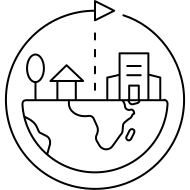
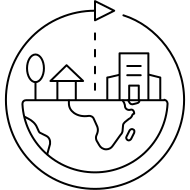
The United Nations (UN) estimates that 68% of the world’s population will be living in cities by the year 2050 – this represents an increase of the urban population by 2.4 billion people. Accompanying this growth is a higher demand for infrastructure and housing. At the same time, urban space is limited, and further soil sealing should be avoided. To conserve resources and space, the field of reconstruction, conversion and refurbishment is set to play an increasingly important role in the future. The growth in population will also require more efficient infrastructure to be built. National initiatives such as Germany’s € 500 billion off-budget infrastructure fund (Sondervermögen Infrastruktur) should also be mentioned in this context.
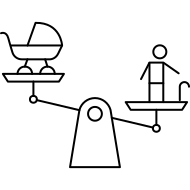
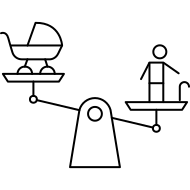
In 2040, with the retirement of the baby boomer generation, we will have a shortfall of workers by more than 10% of today’s working population in our core markets. New, creative approaches will become necessary to fill this gap, especially in the construction sector. The focus will therefore be on recruiting, training, integrating and retaining international skilled labour – especially from countries with opposite demographic trends. At the same time, the demographic trend will promote and accelerate innovation in the construction industry. New methods and new ways of working will be required in order to realise future growth. Concepts such as prefabrication or serial construction – to name just two examples – will play a key role in this process.


In contrast to sectors like the automotive industry, the degree of digitalisation in the construction sector remains relatively low. Experience has shown, however, that the digitalisation and networking of data over the entire life cycle of a building holds clear advantages for all those involved in a project. Systematic data usage, for example, can support project risk management by enabling AI algorithms to identify and minimise financial risks at an early stage. AI also enables significant efficiency gains in planning: generative design can be used to create numerous planning proposals at the touch of a button, drones provide support during surveying, and weather data can optimise processes such as crane deployment planning. Standardisation, digital processes and automation all promise significant productivity gains for the construction industry.
Clients
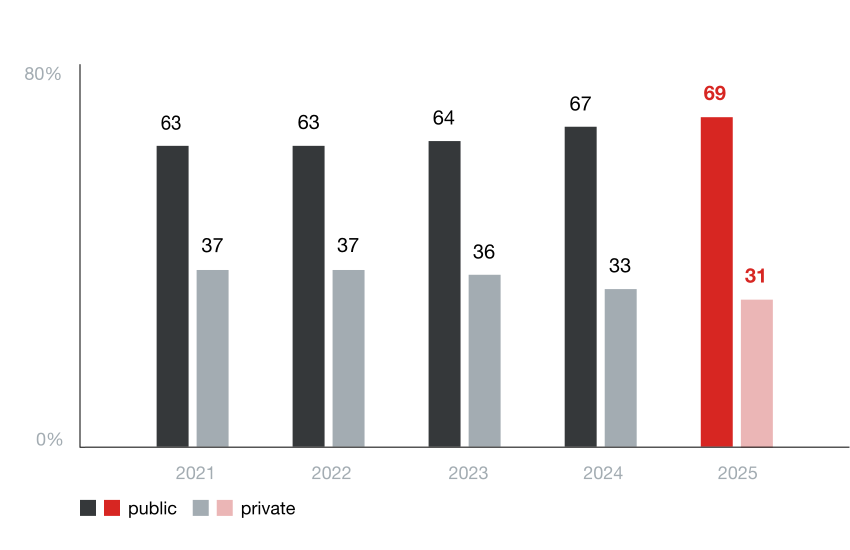
While price is usually the decisive criterion for public-sector clients, private clients often look for the best offer – and this need not always be the lowest bid. The costs over the entire life cycle are considered, including the building’s operating costs. Additional criteria play a role as well: As every building is unique, clients must be able to trust the abilities of the construction company. During tender processes, we are often asked about comparable projects that we have successfully completed in the past. Just as important are the experience and expertise of the construction company’s staff and innovative solutions which may save the client money and time across the entire building life cycle.
In some parts of the public sector, the best bidder principle is beginning to gain a foothold. This principle entails public-sector contracts not being automatically awarded to the company with the lowest monetary bid, but also taking social, environmental and sustainability criteria into account. From an overall perspective, the best bidder principle is better for the population and for the national economy than choosing what at first glance appears to be the most favourable bid.
Every building is unique. Unlike in industries with standardised products, therefore, it is not possible in the construction sector to perform sensitivity analyses showing the influence of changes to a dominant production factor on a company’s key performance indicator. Our business is not determined by just one driving factor; rather, the margins are influenced by several factors. These include certain business realities, such as the risk management system or the know-how of our employees, as well as external influences, such as economic growth (GDP) and demographic trends or the level of public infrastructure spending. Every euro invested in construction leads to demand in other sectors, with the result that the positive impact is multiplied in production and employment.
Our client structure
Key aspects of the business model
The STRABAG Group has a strong track record of sustained earnings growth over the past decade. Even when faced with a challenging economic environment, we have been able to steadily expand our earnings base – all thanks to our business model, which is characterised by the following six pillars:
Critical size and market position
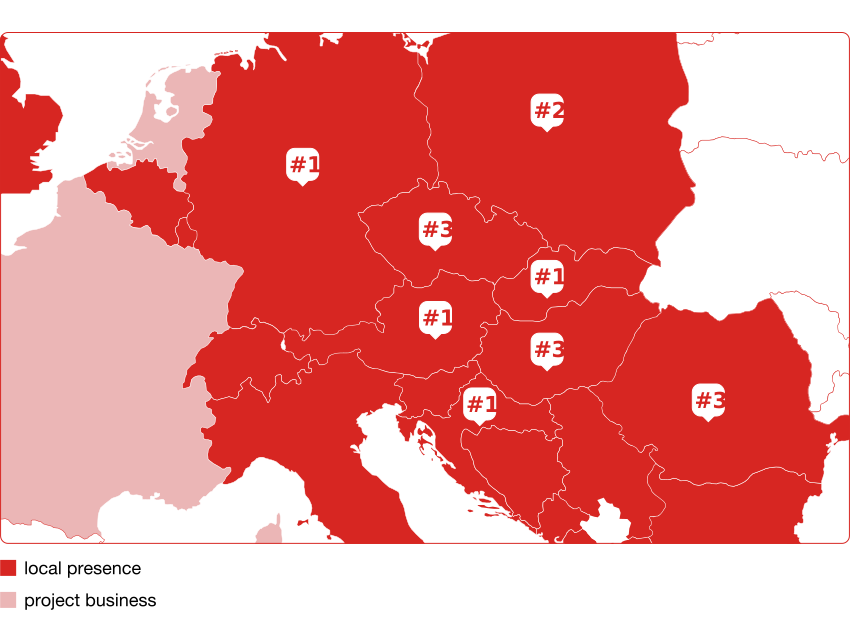
With an annual output of more than € 20 billion, STRABAG is Central and Eastern Europe’s largest technology group for construction services. We are the market leader or one of the largest construction companies in each of our eight core markets of Germany, Austria, Poland, the Czech Republic, Slovakia, Hungary, Croatia and Romania. A strong market position is of crucial importance, as construction companies need a critical mass and sufficient financial resources, especially in more mature markets, in order to successfully bid for and prefinance large projects. This also makes it possible to take advantage of economies of scale. Size is further associated with qualities such as reliability and stability – and this, together with our references, creates trust among our clients.
The market positions shown in the graph below are based on the average output and average revenue for the years 2022 to 2024.
Market positions in core markets
Diversification and resilience
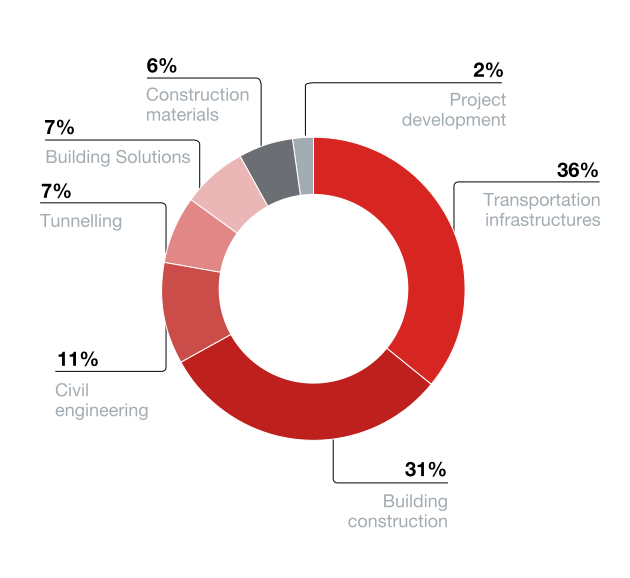
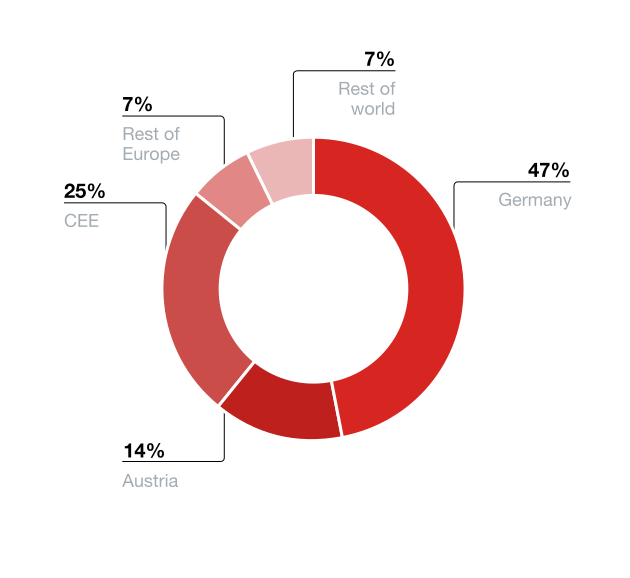
The Group’s broad positioning has proven to be one of our key success factors over the years, contributing significantly to STRABAG’s resilient development. We began to focus on diversification at an early stage – by country and by construction segment. Today, STRABAG is active in over 50 countries and offers services along the entire construction value chain. This allows us to spread our risk and enables us to balance out cyclical and seasonal effects, as each construction segment follows its own cycle: In economically difficult times, for example, the public sector invests more in infrastructure as a way of stimulating the economy, and the transportation infrastructures segment booms. Lower interest rates, on the other hand, are of benefit especially in building construction.
Output volume by segment 2025
Output volume by region 2025
Flexibility and vertical integration
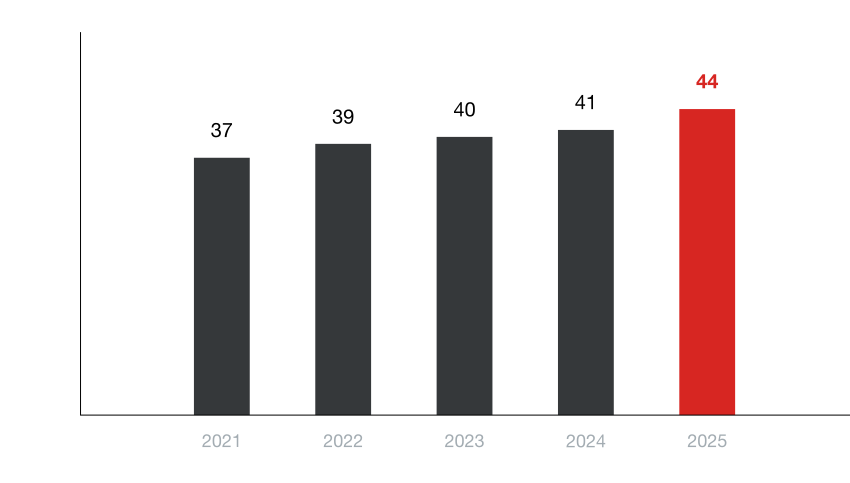
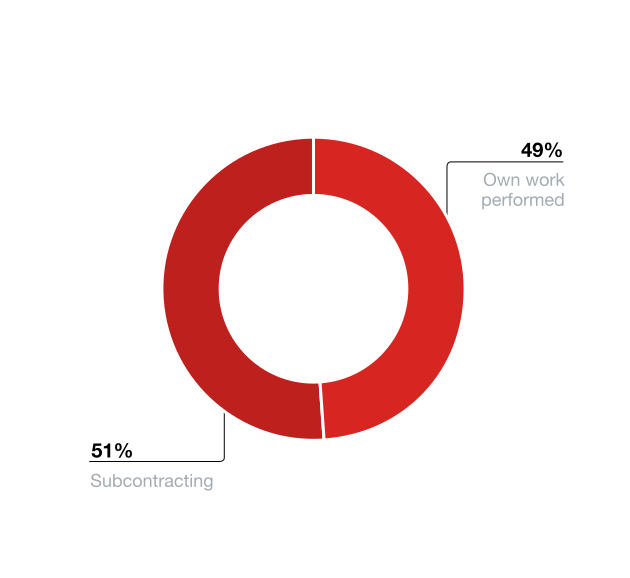
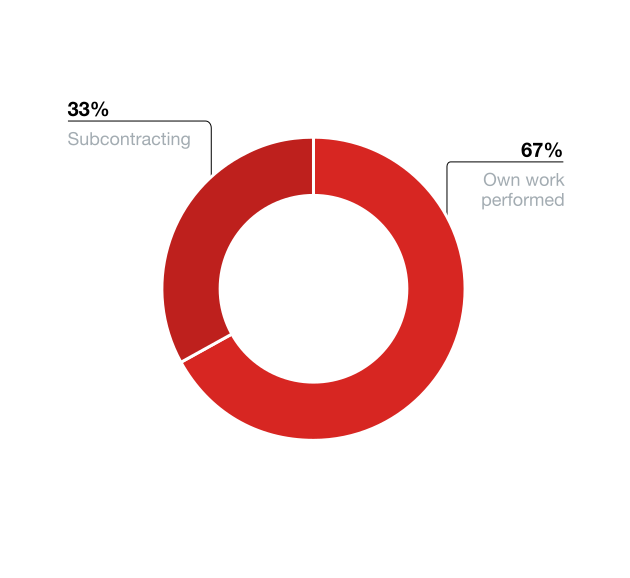
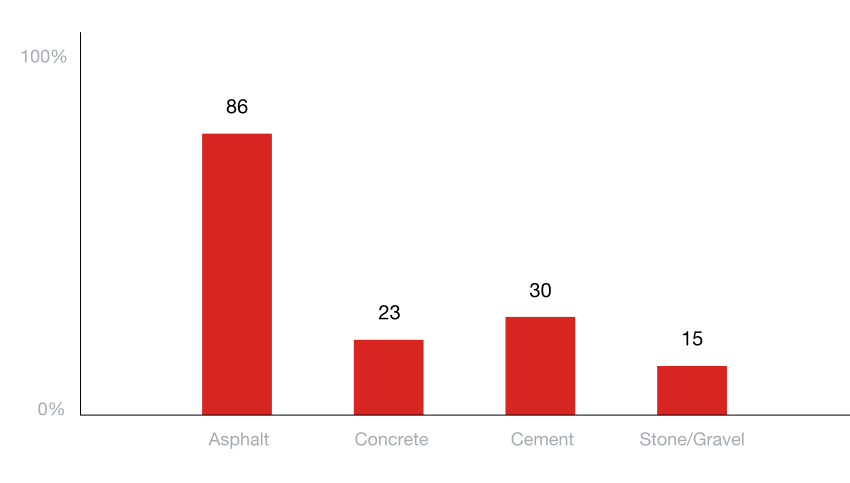
We are pursuing a flexible business model as a way to react quickly to changes in the market environment. We consider this principle to be a key competitive advantage. Our flexibility is supported in part by our diversified portfolio, which extends far beyond traditional construction activities to include areas such as building materials or building solutions. STRABAG began to focus on vertical integration at an early stage – a strategy that has shown its worth: In times of stressed supply chains, for example, our dense network of building materials operations ensures the availability of the materials we need while balancing out the dynamic price developments. We also outsource certain trades – more so in building construction and civil engineering than in transportation infrastructures – to subcontractors, which allows us to adapt our capacities to the prevailing market environment.
Subcontracting
building construction and civil engineering
Subcontracting
transportation infrastructures
Financial strength and risk management
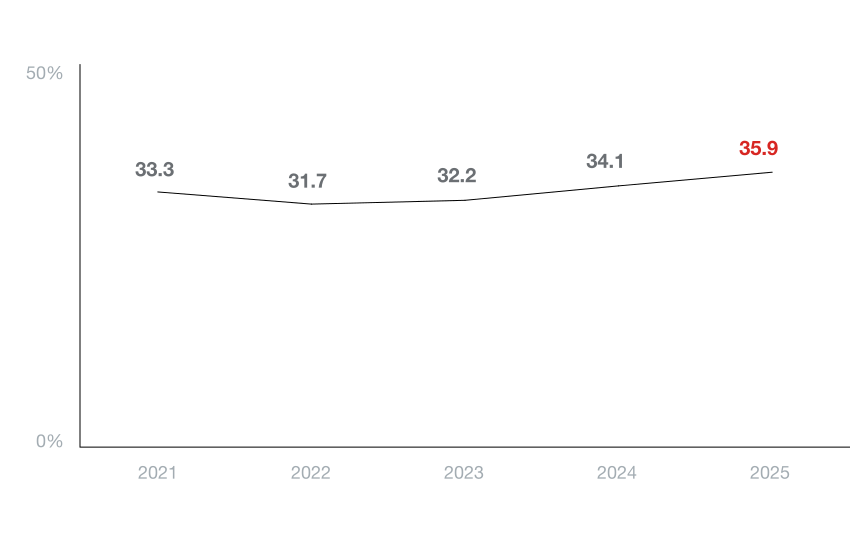
Financial strength is the basic prerequisite for having our bid considered. It also allows us to take advantage of business opportunities in a flexible manner, such as participating in concession projects or realising acquisitions. Maintaining our financial strength is a strategic priority for us, and we are committed to maintaining an equity ratio of at least 25%. Our financial strength – currently expressed by an equity ratio of 35.9% and a net cash position of € 3,518.26 million – is independently attested to and reflected in a BBB+ Standard & Poor’s investment grade rating with stable outlook.
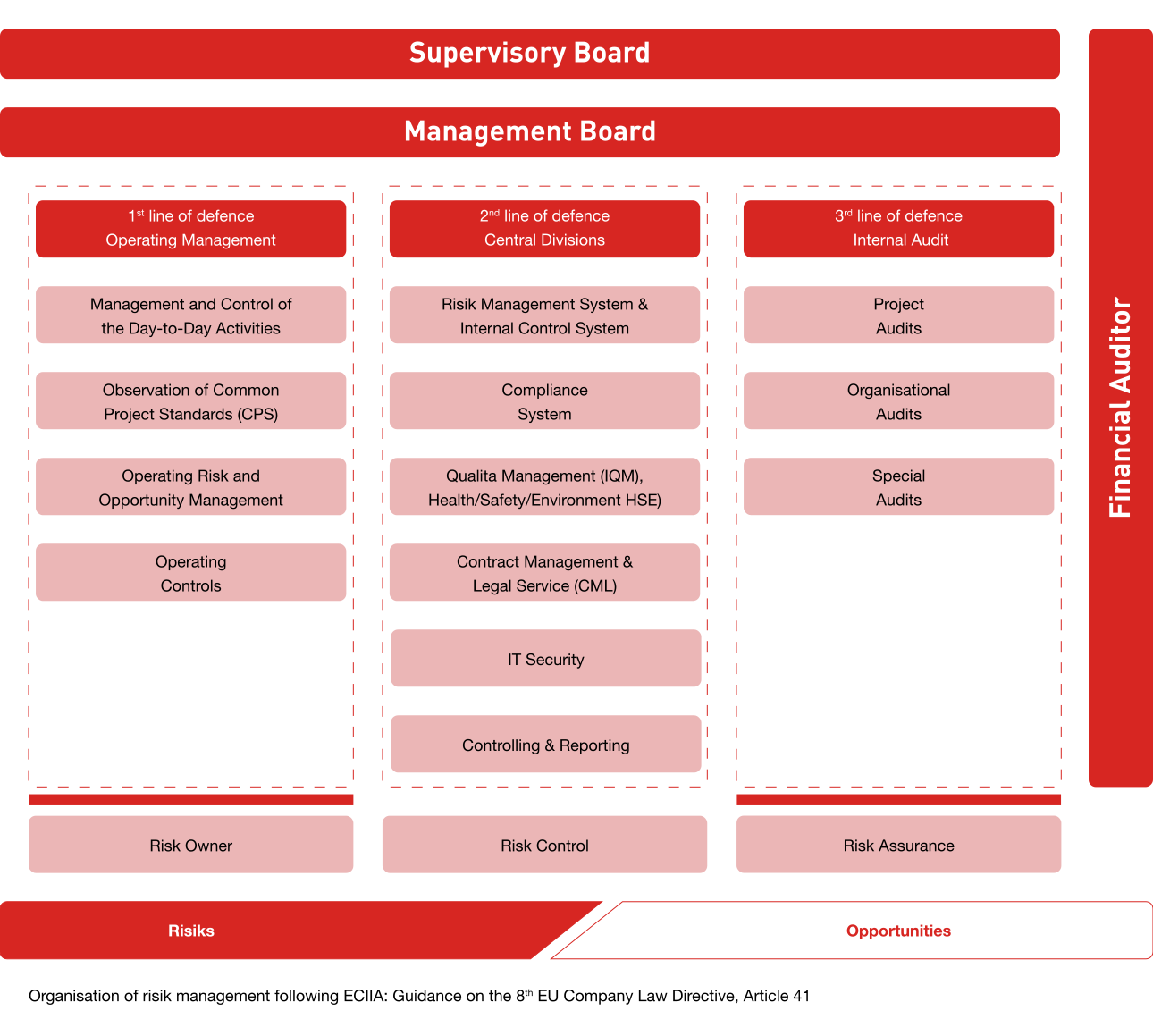
At least as important for a construction company as its financial resources is its project risk management. After all, the large number of projects – each of which is unique in its own right – entails an increased risk potential. Keeping this under control requires a consistently focused organisational structure with clearly defined responsibilities and effective instruments for active risk and opportunity management. A system like this can only be established over the long term and therefore represents a significant competitive advantage that is difficult for the competition to copy.
Development of the equity ratio
Sustainability and climate neutrality
The construction and operation of buildings are acknowledged as carbon-intensive activities. But this also means that changing just one thing results in many other changes elsewhere. This is precisely the progress we are working on – with over 400 sustainability projects across the Group. Our sustainability activities are based on our sustainability strategy, which is part of our long-term corporate strategy. It covers several focus areas relating to the environment, social responsibility and sustainable corporate governance. STRABAG is committed to science-based climate targets to limit global warming to 1.5°C and aims to achieve climate neutrality across its entire value chain by 2040.
Innovation and digitalisation
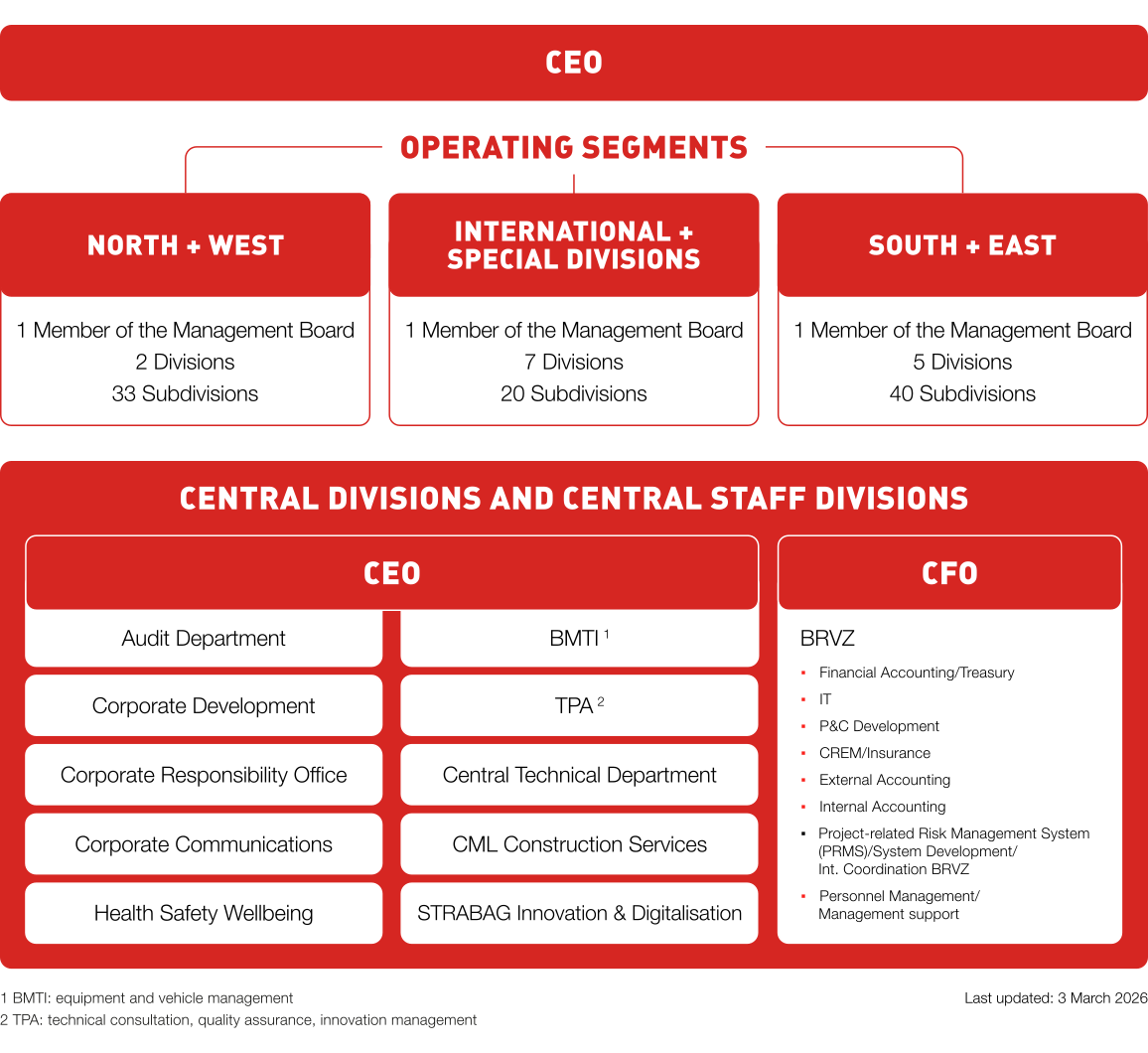
Today, STRABAG is no longer just a construction company, but a leading construction technology group. In 2020, a new central division, STRABAG Innovation & Digitalisation (SID), was established in part to reflect our commitment to technology leadership. SID, which reports directly to the CEO, is driving forward STRABAG’s digital transformation while handling over 250 innovation projects with 470 experts at more than 20 locations across the Group. The aim is to increase our productivity, counteract the labour shortage, reduce CO2 emissions and ensure STRABAG’s competitiveness in the long term. Specific ways in which we are doing this include standardisation (e.g. prefabrication or serial construction), digital processes (e.g. BIM 5D® or GIS data) and automation (e.g. construction robotics).